2026 SkeptiCal Conference
Topics & Speakers
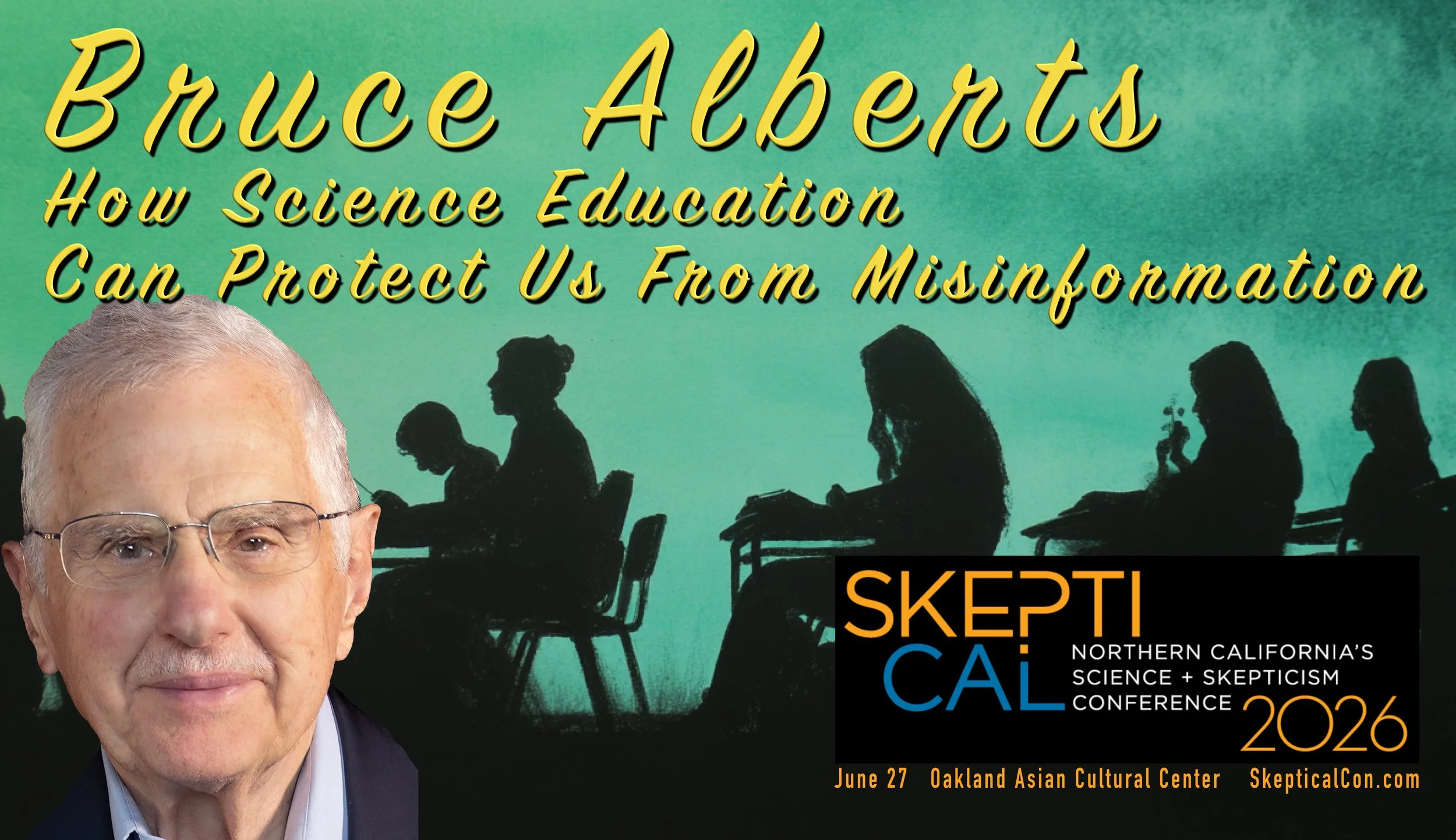
How Science Education
Can Protect Us from Misinformation
Bruce Alberts
The rejection of scientific judgements on issues that range from vaccination to climate change threatens the future of humanity. I contend that dismissing a scientific consensus as “the dogma of scientists” represents a failure of science education and that it demands changes in how science is taught, at all levels from elementary school through college.
Bruce Alberts, a prominent biochemist with a strong commitment to the improvement of science education, was awarded the National Medal of Science by President Barack Obama in 2014. He served as Editor-in-Chief of Science (2008-2013) and as one of President Obama’s first three Science Envoys, assigned to Indonesia (2009-2011). In 2005, after serving for 12 years as the president of the National Academy of Sciences (NAS), Alberts returned to the Department of Biochemistry and Biophysics at the University of California, San Francisco.
During his tenure at the NAS, Alberts was instrumental in developing the landmark National Science Education Standards (1996), emphasizing science as inquiry. Committed in his international work to the promotion of the “creativity, openness and tolerance that are inherent to science,” Alberts believes that “scientists all around the world must band together to help create more rational, scientifically based societies that find dogmatism intolerable.”
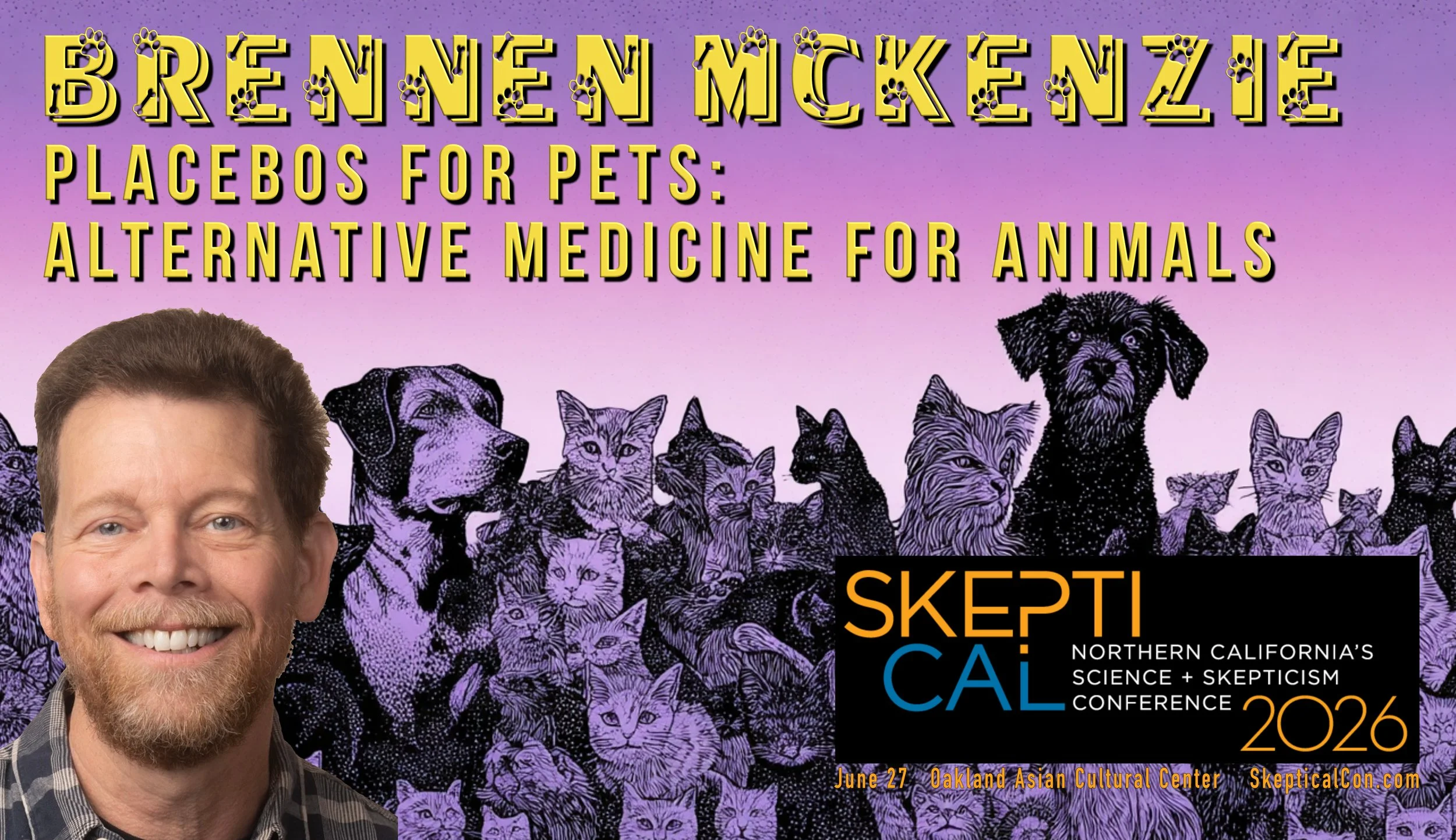
Placebos for Pets: Alternative Medicine for Animals
Brennan McKenzie
This session will explore the infiltration of pseudoscience and alternative medicine into the care of our pets. Vaccine refusal, fear of “chemicals,” the popularity of raw diets and “natural” remedies, even pet psychics and energy healers are all part of a large and varied collection of unscientific ideas and practices that confuse pet owners and harm veterinary patients. We will examine the causes, manifestations, and possible remedies for the problem of unproven, ineffective, and bogus healthcare practices that endanger the pets who rely on us to care for them.
Dr. Brennen McKenzie has been a small animal general practitioner for twenty-five years. He obtained his veterinary degree from the University of Pennsylvania and an M.Sc. in Epidemiology from the London School of Hygiene and Tropical Medicine. He is a past-president of the Evidence-based Veterinary Medicine Association and author of the SkeptVet Blog and the book Placebos for Pets? The Truth About Alternative Medicine for Animals. In 2023, Dr. McKenzie received the VIN Veritas Award for science communication. He is currently the Director of Veterinary Medicine for Loyal, a biotechnology company developing medicines to extend healthy lifespan in dogs.
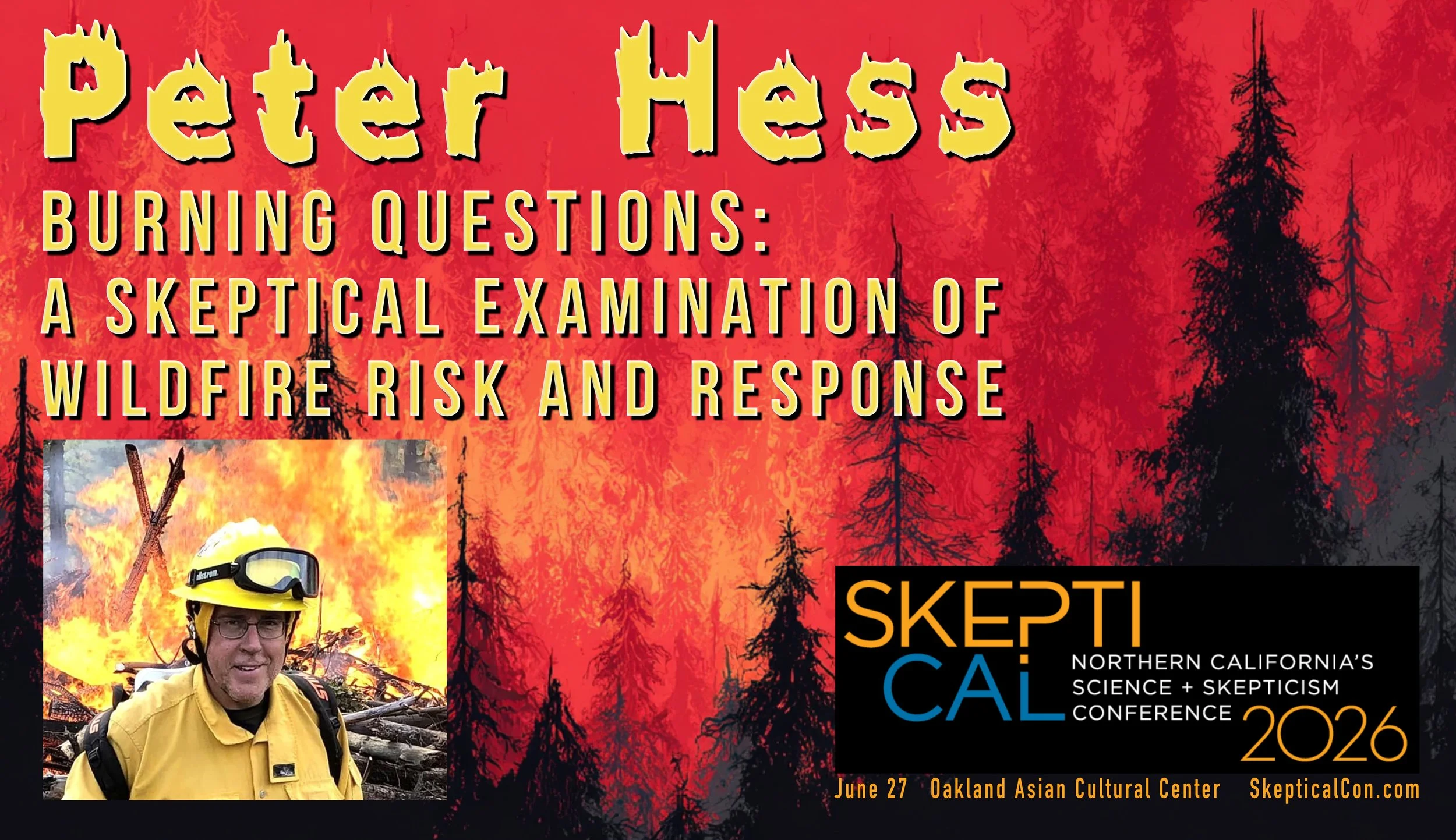
Burning Questions:
A Skeptical Examination of Wildfire Risk and Response
Peter Hess
Exacerbated by climate disruption, wildfires globally are increasing in frequency and severity. Applying scientific skepticism to contentious questions, how do we know wildfires are increasing? Historically what were ecological fire regimes like? How large a factor is anthropogenic climate disruption in wildfire growth? Do forest thinning, clearing of firebreaks, application of herbicides, and prescribed burns work as intended to reduce fuel loads? Peter argues that disciplined skepticism is essential for understanding both the growing wildfire risk and rational responses to that threat.
Peter M. J. Hess is both an historian and a wildland fire practitioner. He earned his M.A. in philosophy from Oxford University (1984), his Ph.D. in historical studies from the GTU and U.C. Berkeley (1993), and his Firefighter Type Two (FFT2) certification in 2022. He has taught in a number of universities and served the National Center for Science Education in Oakland (2006-2014). Peter is co-author of Catholicism and Science (2008) and numerous articles on issues in history, ethics, and ecological sustainability. He is co-founder of the Lake County Prescribed Burn Association (LCPBA) and manages his ninety acres of wildland on Cobb Mountain. Peter also teaches on cultural and prescribed fire at the University of San Francisco. He and his wife Viviane have two sons, Michael and Robert, both trained as wildland firefighters.
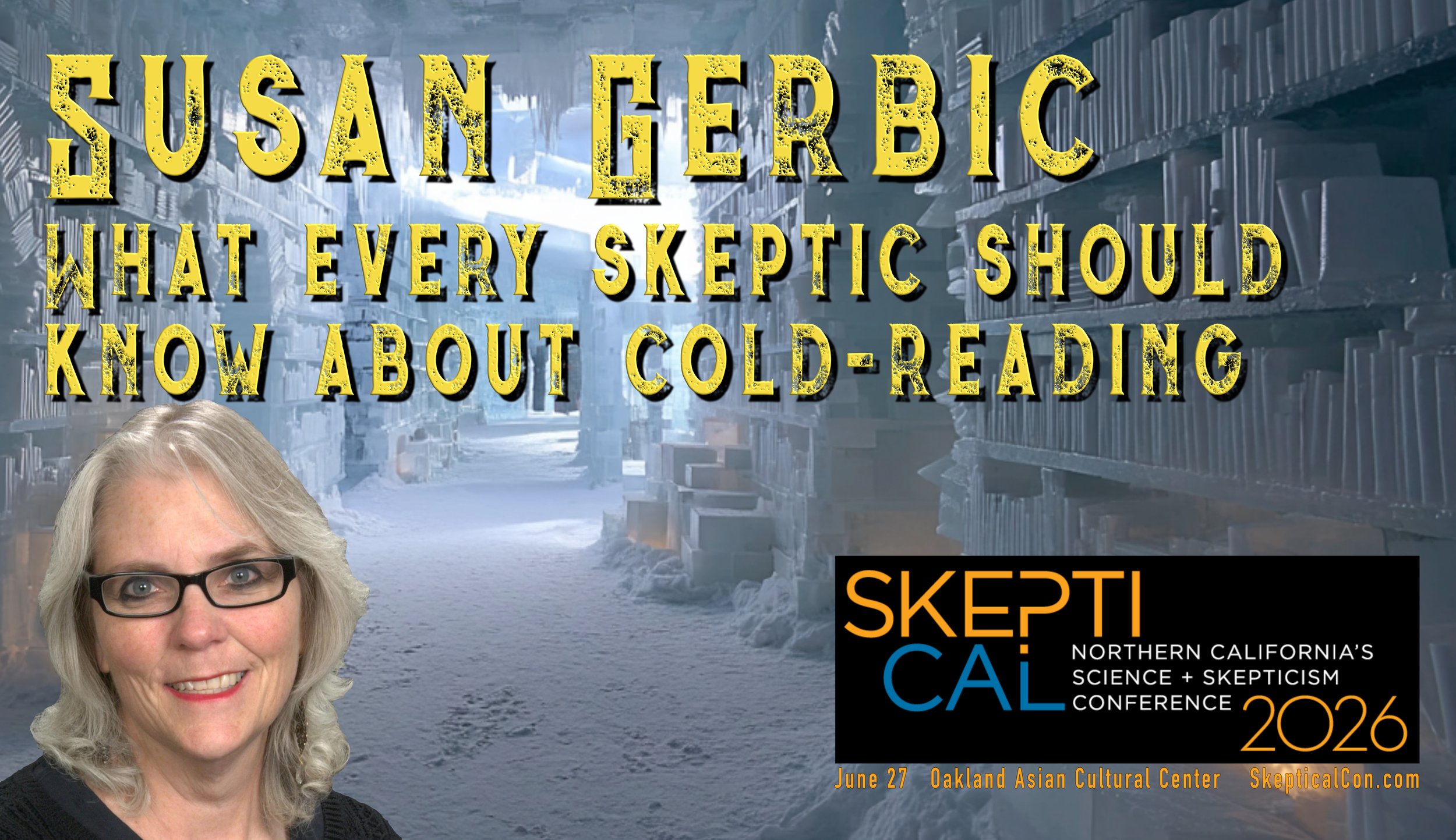
What Every Skeptic Should Know
about Cold-Reading
Susan Gerbic
In this talk, Susan will explain her ongoing research into the methods used by psychic mediums. She will show real examples of cold-reading and why it matters in understanding the harm these people Susan calls Grief Vampires does to vulnerable people looking for miracle answers. You can find her research on her YouTube channel @PsychicsExplained or follow her writings at www.skepticalinquirer.org
Affectionately called the Wikipediatrician, Susan Gerbic is the founder of Guerrilla Skepticism on Wikipedia (GSoW). A Skeptical Inquirer contributor, Gerbic is a fellow of CSI and winner of the James Randi Foundation award for 2017. In 2018, Susan founded and manages About Time a non-profit organization focusing on scientific skepticism and activism. While her particular focus has been “Grief Vampires” (psychics), her activism encompasses all areas of skepticism. She is an official reporter for The Skeptic Zone podcast. You can find out more at AboutTimeProject.org.
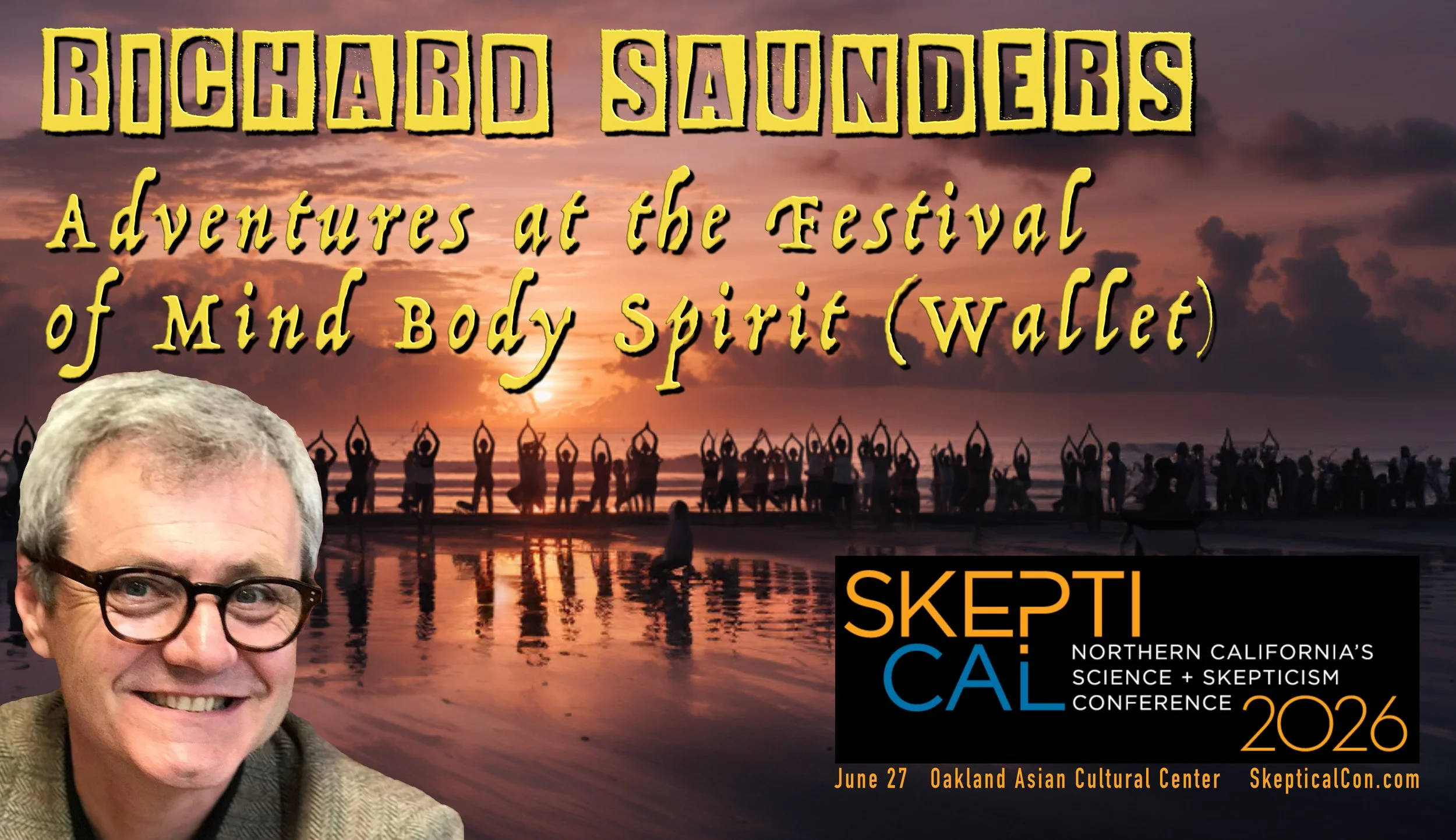
Adventures at the Festival of Mind Body Spirit (Wallet)
Richard Saunders
Richard Saunders reviews 25 years of visiting Australia's biggest psychic and new age festival. From outrageous quackery to psychics to mystical machines, Richard has seen it all. In this talk he'll look at the history of the event dating back to 1989 and look at some of the more bizarre and dangerous products and services aimed at a gullible public.
Richard Saunders from Sydney, Australia starred as the "Skeptical Judge" on two seasons of the TV show "The One: The Search for Australia's Most Gifted Psychic". He is also the host of the weekly podcast "The Skeptic Zone", now in its 18th year. Richard is an origami expert and children’s author, CSI Fellow, life member and chief investigator of Australian Skeptics and was part of the James Randi Education Foundation $1,000,000 challenge. In 2021 published the largest study ever undertaken into “psychic” predictions.
Selective Skepticism is Not Skepticism
Thomas Smith
Debunking conspiracy theories has long been central to the skeptic movement. And while conspiracy thinking is not inherently right-wing or left-wing, the rise of MAGA and MAHA has shown how overwhelmingly conspiracy theories, misinformation, and anti-scientific thinking have taken over the modern American right.
But in the wake of the attempted assassination of Donald Trump in Butler, Pennsylvania, and more recently, the shooting at the White House Correspondents’ Dinner, too many on the left have become willing to entertain the same kinds of conspiracy theories they would once have condemned on the right. This is not at all to make an equivalence between the two sides, but it is to say that the amount of fallacious conspiracy thinking we should tolerate ought to be zero.
This talk will explore why, even in times that feel unprecedented and chaotic, conspiracies like a successfully staged assassination attempt remain just as unlikely now as they have always been. We cannot turn off our critical thinking simply because the faulty reasoning is coming from people on our own side. Skepticism cannot be selective; if it is, it is not really skepticism at all.
Thomas began podcasting in 2010 with a quest to read the entire bible while providing critical commentary and humor along the way. That project soon led to many others! Now at the helm of five podcasts, Thomas can be heard covering a variety of topics whether your interest is in science, philosophy, and skepticism (Serious Inquiries Only), the law (Opening Arguments, with co-host Matt Cameron; as well as its sister show,Gavel Gavel), parenting and positive masculinity (Dear Old Dads, with Eli Bosnick and Tom Curry), or debunking all of the "woke" controversies the right uses to inflame the culture wars (Where There's Woke, with Lydia Smith). Outside of podcasting, you can catch Thomas cheering on the San Jose Sharks and spending time with his three amazing kids!
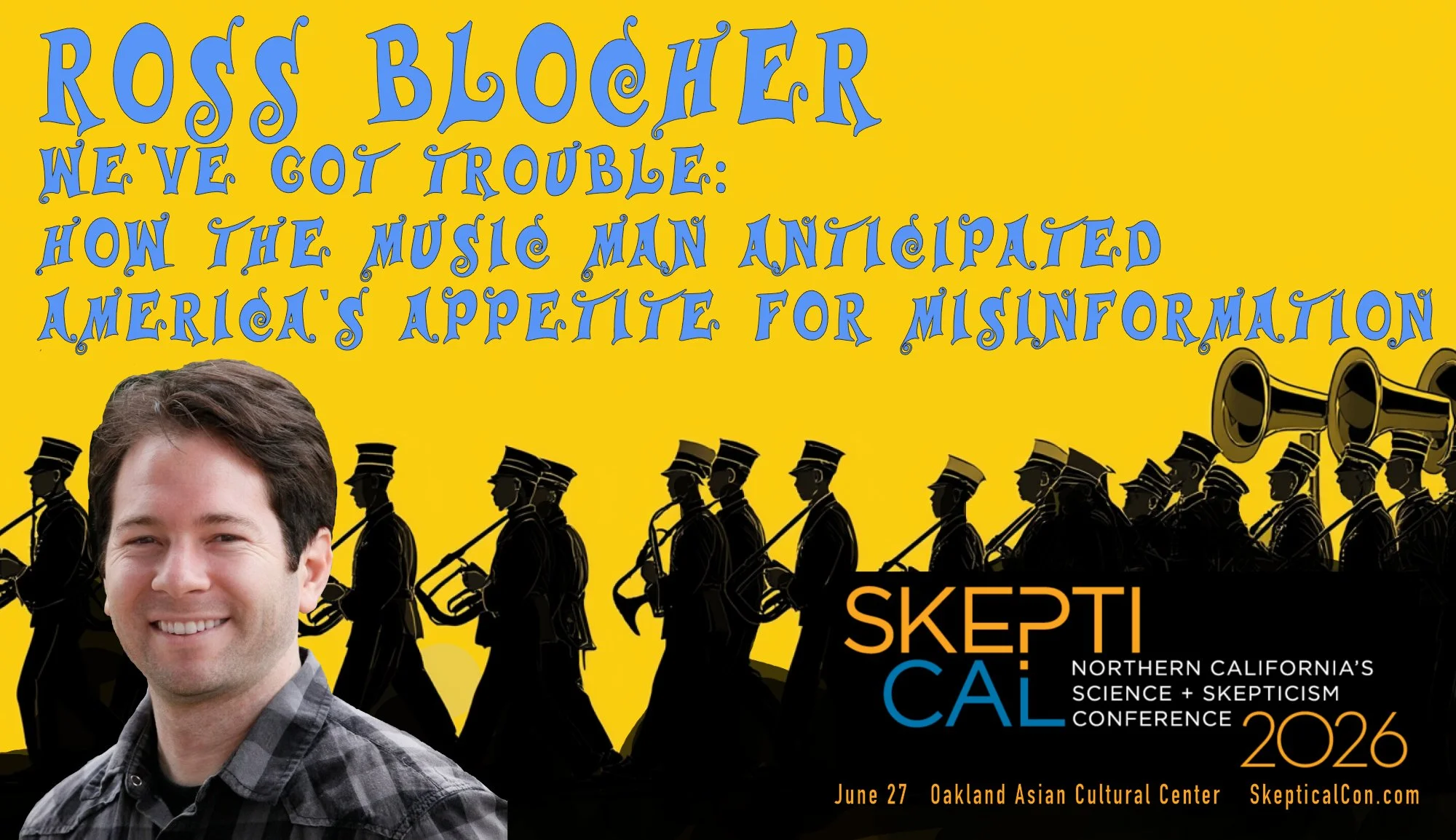
We’ve Got Trouble:
The Music Man and Misinformation in America
Ross Blocher
The 1962 film The Music Man can be very instructive for today’s misinformation ecosystem. Ross explores how its charming con artist, “Professor” Harold Hill, anticipated many of the tactics used by modern grifters. Key scenes and musical numbers are an aperture to Hill’s use of fake credentials, manufactured crises, flattery, distraction, and the neutralizing of local expertise—all deployed to sell a product that doesn’t exist.
Blocher also examines the story’s cultural impact, from its Cold War optimism to its Simpsons parody, and considers why the film’s feel-good ending—where Hill is rewarded rather than exposed—reflects a broader American discomfort with confronting deception. Subtle parallels to contemporary political dynamics round out this fresh look at a classic musical.
Ross Blocher was co-host of the hit podcast "Oh No, Ross and Carrie!", and the upcoming “I’m Sure it’s All True”. He is an investigator of all things fringe science, alternative medicine, paranormal and spiritual. He is a member of the Center for Inquiry Investigations Group (CFIIG), which offers a $500,000 prize for proof of paranormal abilities. Ross was raised in evangelical Christianity and spent a good amount of time in churches of various denominations, memorizing scripture. At the same time, he voraciously read books about ghosts, vampires, aliens and chupacabras. While his beliefs changed, his fascination didn't, and Ross continues to pursue the experiences and varieties of belief.
From False color to Fake content:
When is an Astrophotograph Real?
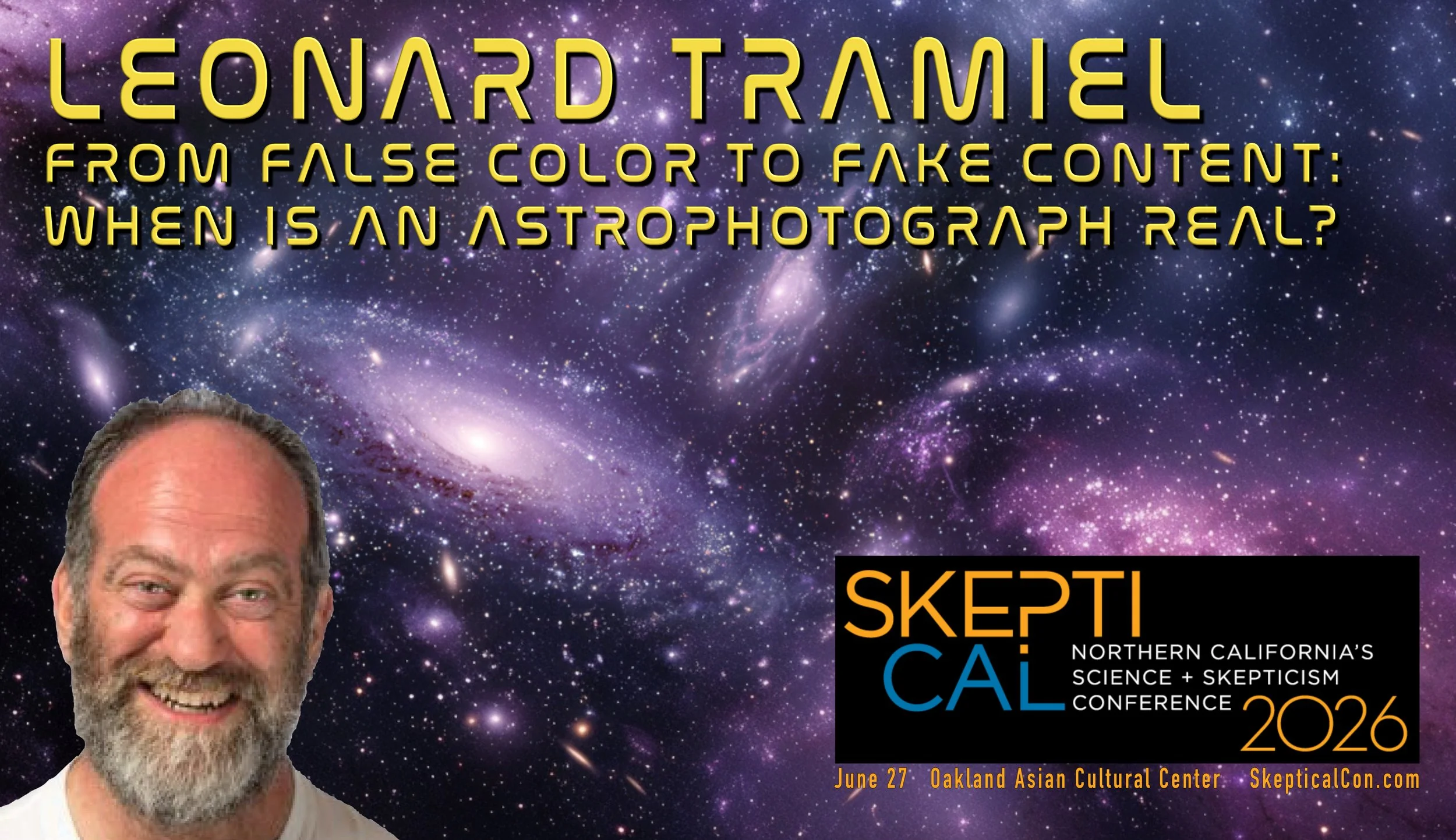
Leonard Tramiel
There has been what seems to be a veritable deluge of fantastical images and astounding claims on our social media feeds. Are they real? And what does “real” mean when the subject of the "image" is something that cannot be seen by unaided human eyes? How can we tell which ones are real, does it matter, and should we care?
Leonard Tramiel has been a scientific skeptic since long before he knew there was a term for it. He has been an amateur astronomer since 3rd grade, and received a Ph.D. in Physics from Columbia University somewhat later. He currently is a telescope operator at the Chabot Space and Science Center and a CSI fellow.
Entertainment
Skepardy!
Bill Patterson
Skepardy! is our skeptically-themed version of the popular game show “Jeopardy!”.
We are proud to have Skepardy! back for yet more skeptically themed game show segment of our event. Bill has been quizzing clever people for years, and for this event we'll have as celebrity contestants (to be announced) and questions from your favorite skeptics, as well.
Bill Patterson was a high school physics teacher for ten years, a Peace Corps volunteer, and a youth agency executive. He currently is a radiation therapist living in Sonoma County, California. He loves all things rational, and is a board member of Bay Area Skeptics.

Host: Bill Patterson
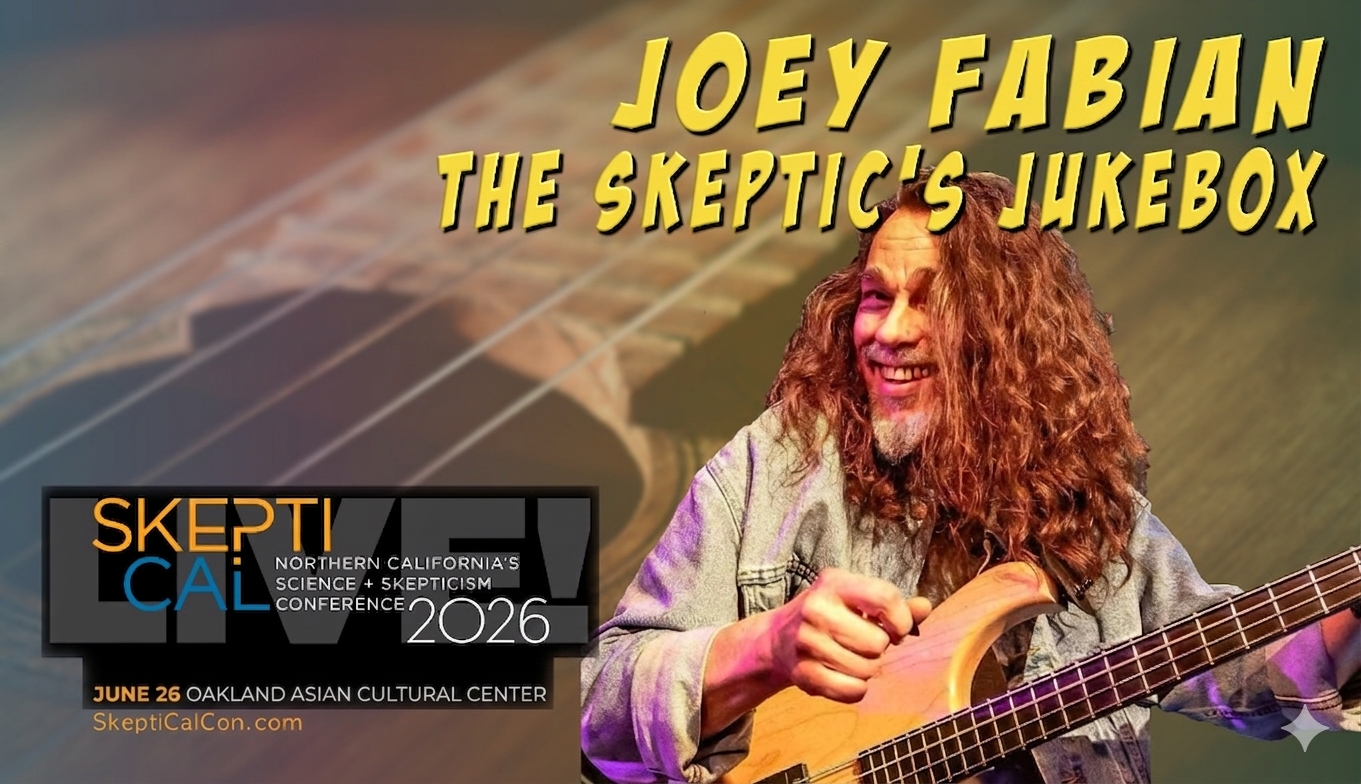
The Skeptic’s Jukebox
Joey Fabian
Joey is a San Francisco Bay Area bassist/multi-instrumentalist/vocalist, composer, producer/engineer/editor and bass/guitar instructor. His performance credits include critically acclaimed fusion unit The Bartron Tyler Group, BMA nominated blues singer Paula Harris, pop star Alana Davis and guitar hero Will Ray of The Hellecasters. He currently tours with The Stinkfoot Orchestra; a 14 piece tribute to Frank Zappa featuring alums like Napoleon Murphy Brock.
In 2011 he began performing songs of a skeptical nature via “The Skeptic’s Jukebox”.
His studio “The Tomato Farm” is his base of operations for teaching bass and guitar, producing music and podcasts, editing audio, producing elements for a nationally syndicated radio show and more.